A sovereign approach to provenance
To bridge the centuries-old tradition of fine art printmaking with the absolute permanence of the digital age, I have established a custom, future-proof authentication protocol for all physical editions.
Designed with institutional standards and long-term collectors in mind, this system ensures that each physical print possesses an unforgeable, permanently verifiable link to its digital registry on the blockchain — completely independent of any single marketplace or third-party platform.
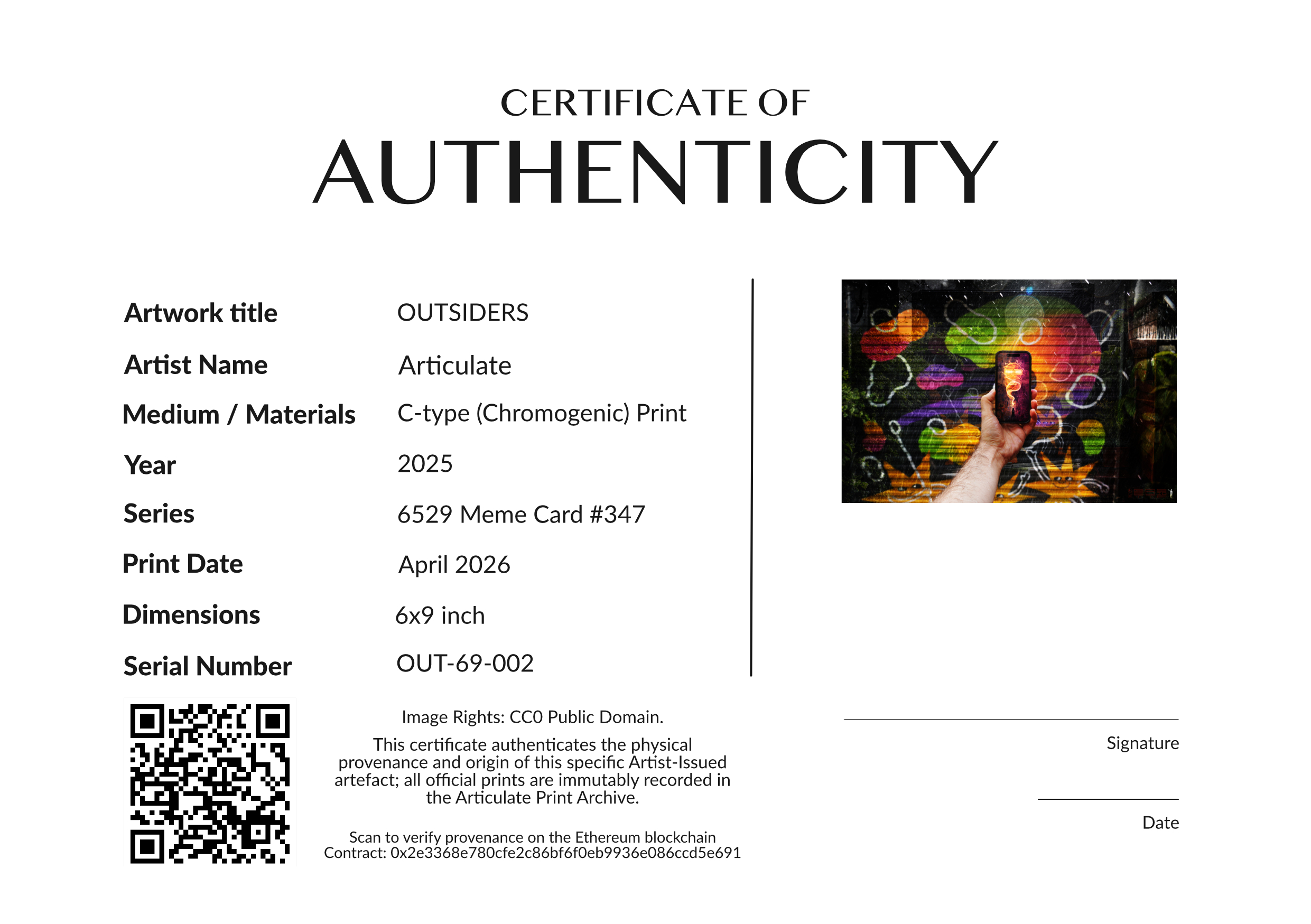
Verify this certificate on-chain →
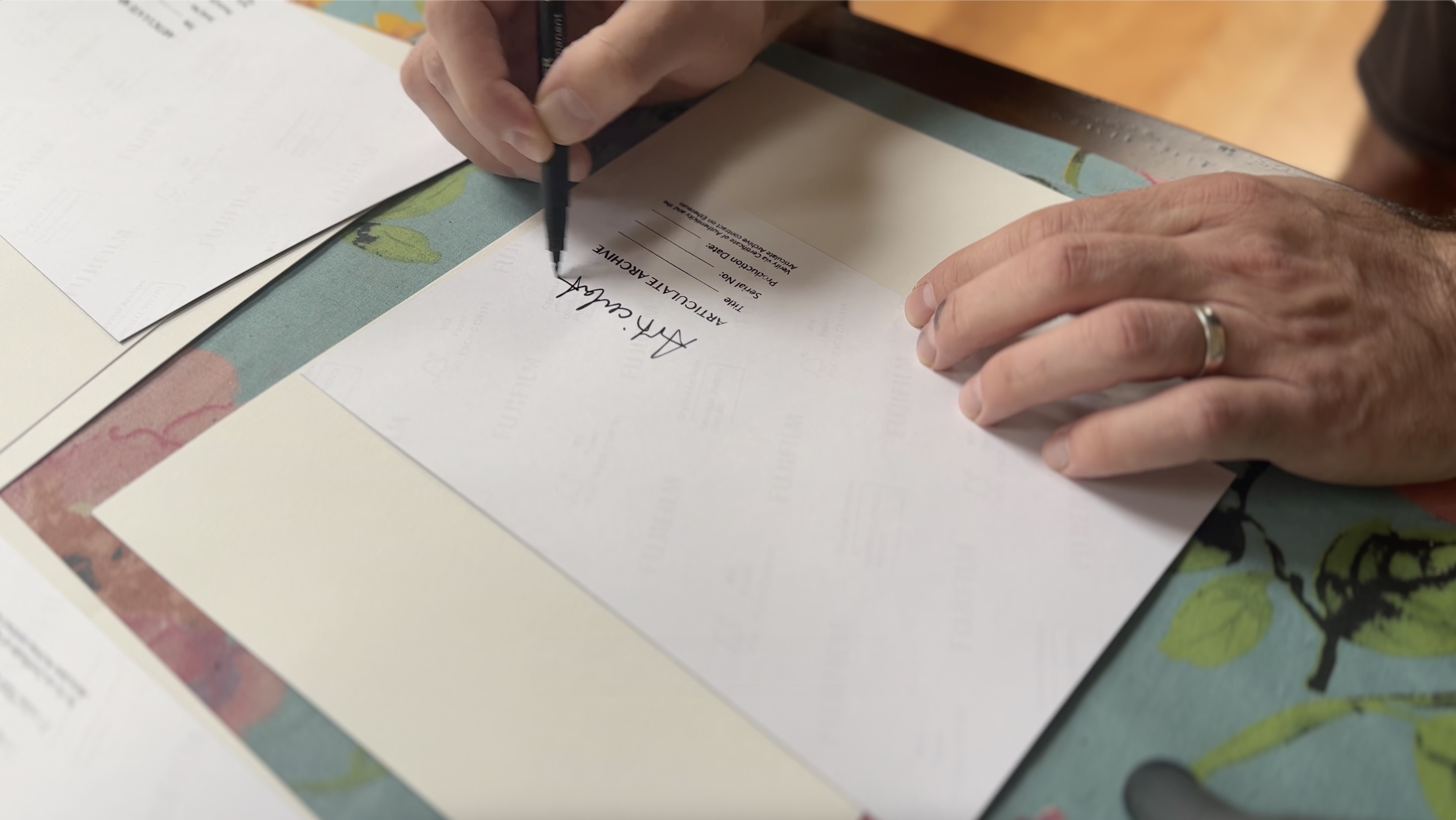
The authentication workflow begins the moment a print is produced. Each print is signed by hand, labeled with a unique serial number, and marked with an authentication stamp using permanent, solvent-based archival ink.
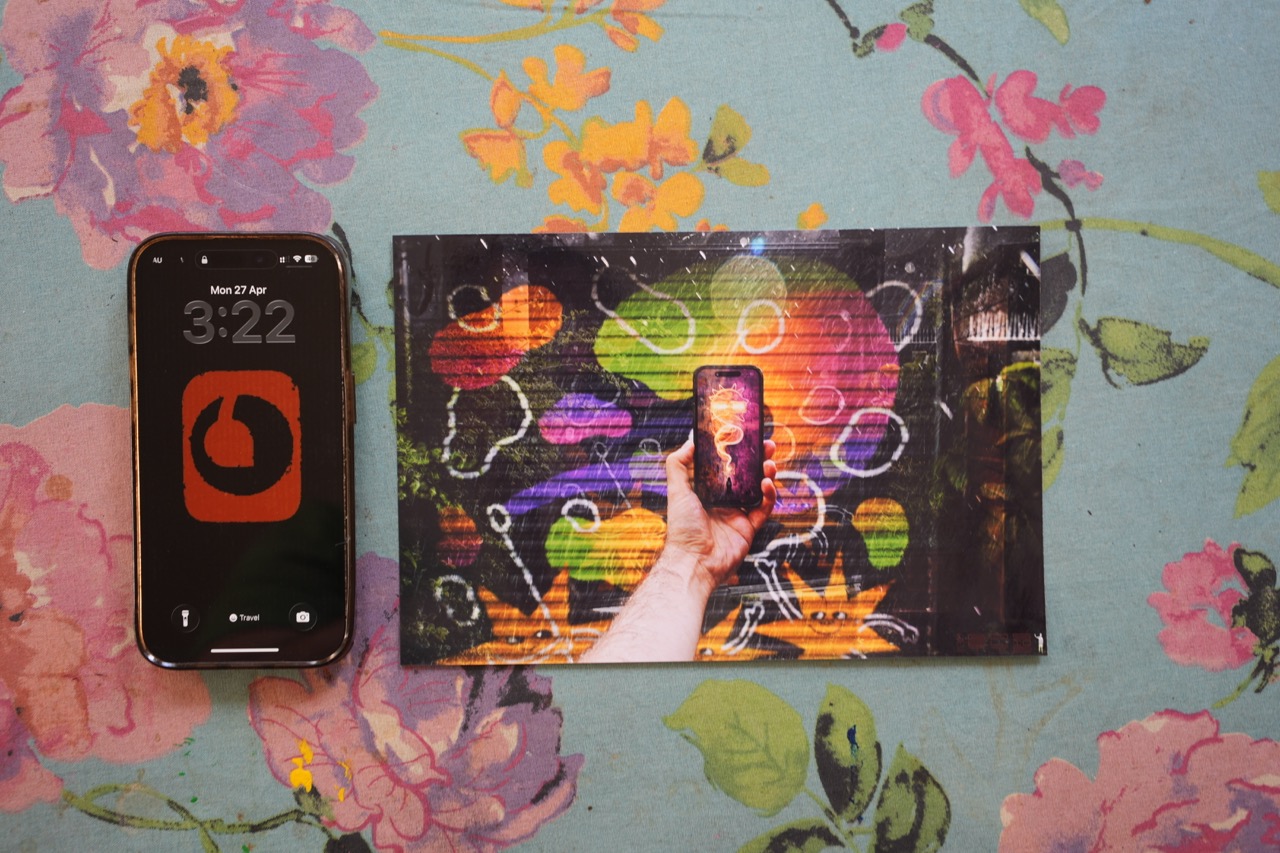
To create an indisputable temporal lock between the physical object and its digital identity, a forensic documentary photograph is taken. This photograph captures the physical print alongside a live network clock showing the exact date and time of authentication.
This image, along with its detailed material metadata, is then minted directly onto the Ethereum blockchain in the Articulate Archive contract — creating an immutable, decentralised Certificate of Authenticity (dCOA) that can never be altered or erased.
To ensure this provenance remains bulletproof for decades, the physical certificate features a QR code powered by sovereign web infrastructure. Rather than pointing to a volatile marketplace link that might change or become obsolete, the code uses a permanent custom gateway — archive.articulate.art/[Serial].
Managed at the core network level, this pointer acts as a permanent vault registry. If the platforms we use to view the blockchain shift over the next fifty years, the physical print and its QR code never change; the backend routing is simply updated to direct the collector to the true, uninterrupted source data on the blockchain.
This architecture scales effortlessly, allowing the archive to expand indefinitely while preserving a clean, museum-grade ledger for every work produced.